When Can a Puppy Go to the Dog Park?
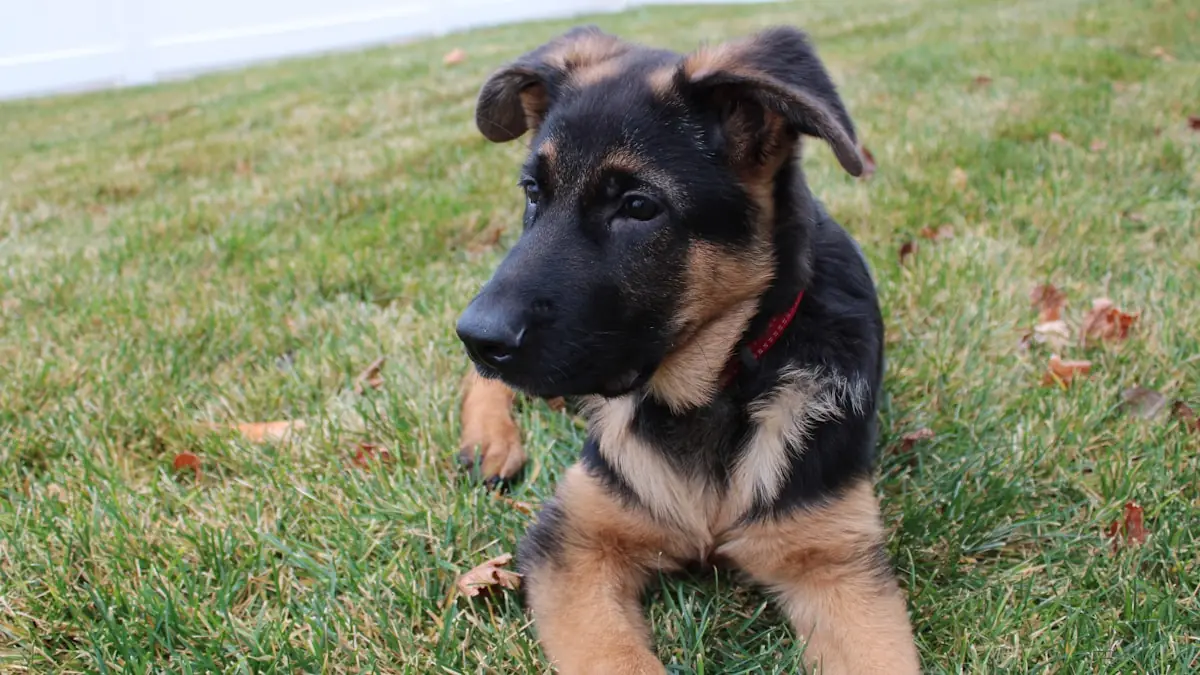
You just brought home a puppy, and everyone has an opinion. "Don't take her anywhere until she's fully vaccinated." The trouble is that fully vaccinated lands right around 16 to 18 weeks, and the developmental window where socialization actually sticks is already closing by then.
So the honest answer to "when can my puppy go to the dog park" is really two answers at once: when it's safe from disease, and when it's safe from a lifetime of fear. This guide reconciles both, with vet- and AVSAB-backed timing, plus the safe things you can do today.
The short answer
Wait until about 1 to 2 weeks after your puppy finishes the full puppy vaccine series, which usually completes around 16 weeks of age. That puts the earliest reasonable dog-park visit at roughly 17 to 18 weeks.
"Fully vaccinated" is the part people get wrong. It does not mean the first shot. It means your puppy has completed the entire core series, with the final dose given at 16 weeks of age or older (AVMA). A puppy isn't reliably protected until that whole series is done, which is exactly why the AKC advises keeping young puppies out of dog parks and obedience classes until they've had their full set of shots.
One more distinction worth making: a busy, open, public dog park is not the same as controlled socialization. Plenty of trainers suggest holding off on the crowded off-leash scene a bit longer, until your puppy is older and more confident, even after the vaccine math clears. The early weeks are for building good experiences, not for throwing a 17-week-old into a free-for-all.
The reason this isn't just a date on a calendar is the real subject of this article: a genuine tension between protecting your puppy from disease and protecting her from fear.
Why you have to wait: parvo and the immune gap
The puppy vaccine series isn't busywork. Core shots (the DHPP combination that covers distemper and parvovirus) start at about 6 to 8 weeks, repeat at 10 to 12 weeks, and finish with a dose at 16 to 18 weeks (AKC). The series runs that long for a specific biological reason.
When puppies nurse, they absorb maternal antibodies from their mother. Those antibodies offer early protection, but they fade unpredictably, and there's a catch: they can drop too low to protect the puppy while still sitting high enough to inactivate a vaccine before it takes. Veterinary Partner calls this the window of vulnerability, and it's why vets give a vaccine every 2 to 4 weeks until about 16 weeks of age, by which point maternal antibodies have reliably waned and the vaccine can do its job (Veterinary Partner / VIN).
The headline threat in that gap is parvovirus. It's resistant to heat, cold, humidity, and drying, and it can survive in the environment for long stretches, spread through infected feces and contaminated ground (AVMA). A patch of grass where an infected dog was weeks ago can still carry it. That description should sound familiar: it's a dog park.
The most at-risk group is puppies roughly 6 to 20 weeks old along with unvaccinated or incompletely vaccinated dogs (AVMA). A young, half-vaccinated puppy on shared public ground is close to the worst-case combination. That's the case for patience.
Why you can't just wait: the socialization window closes first
Here's the part the "keep her home until 18 weeks" crowd misses. There's a developmental clock running too, and it's faster than the vaccine clock.
The primary socialization period is roughly the first three months of life (AVSAB). During this stretch, a puppy's brain is wired to accept new things as normal: new people, dogs, surfaces, sounds, handling. Sociability outweighs fear. Experiences that happen now tend to set the baseline for how your dog reads the world for the rest of her life.
Notice the cruel overlap. That window is closing right as full vaccination finishes around 16 weeks. If you wait for total disease safety before any exposure, you've largely missed the period when good experiences are easiest to build.
And the stakes aren't abstract. According to AVSAB, behavioral issues, not infectious disease, are the number one cause of death for dogs under three years of age (dvm360, reporting AVSAB). Dogs that miss early socialization are more likely to grow into fearful or reactive adults, and fear and reactivity are what land dogs in shelters. Under-socialization is a real risk with a real body count.
So the right frame isn't a rule to obey. It's a trade-off to manage. The goal is maximum safe exposure, not zero exposure. If you want a fuller picture of why peer play matters so much, why dogs need to play with other dogs goes deeper.
What the experts actually recommend
This is where the official guidance is clearer than the rumor mill suggests. AVSAB's position is direct: it should be the standard of care for puppies to receive socialization before they are fully vaccinated (AVSAB). Not "if you're brave." The standard of care.
In practice, that means puppies can begin structured socialization classes as early as 7 to 8 weeks old, with a sensible safety floor: a minimum of one set of vaccines at least 7 days before the first class, plus a first deworming (dvm360, reporting AVSAB). The point is that you don't need full protection to start safely. You need some protection and a controlled environment.
The reassuring evidence backs this up. A study of puppies in socialization classes found that of 279 vaccinated puppies who attended, none were suspected of or diagnosed with parvovirus, and vaccinated puppies who attended were at no greater risk of CPV than vaccinated puppies who stayed home (Stepita, Bain & Kass, Journal of the American Animal Hospital Association, 2013).
So "before fully vaccinated" does not mean "before any protection." It means controlled, vaccinated, low-risk exposure, which is a different thing entirely from an open public dog park.
Safe things to do right now (weeks 8 to 16)
Your puppy can't hit the dog park yet, but the socialization clock is running, so put these weeks to work. The common thread: known, vaccinated dogs and clean, controlled ground instead of high-traffic public dirt.
- Puppy socialization or kindergarten classes. Sanitized indoor floors, screened playmates, and a trainer reading the room. This is the gold standard for early exposure.
- One-on-one playdates with a healthy, fully vaccinated adult dog you know and trust, ideally a patient, dog-savvy one who'll model good manners.
- Carry-and-expose. Before paws-on-the-ground clearance, you can still introduce the world from your arms, a sling, or a stroller: traffic, strollers, bicycles, umbrellas, men in hats, kids, other animals, the vacuum, the hair dryer. Eyes and ears count even when feet stay off the sidewalk.
- Clean, controlled spaces like a friend's fenced yard where you know the dogs are vaccinated and healthy. Skip places frequented by unknown, unvaccinated dogs.
A quick exposure checklist for these weeks: different people (ages, sizes, beards, uniforms), surfaces (grass, tile, gravel, metal, stairs), sounds (doorbells, thunder recordings, traffic), and gentle handling (paws, ears, mouth, nail trims, brief restraint). Keep every encounter short, upbeat, and paired with treats. You're banking good first impressions.
Graduating to the real dog park: a readiness checklist
When the vaccine math and the temperament line up, ease in rather than diving in.
| Check | What you're looking for |
|---|---|
| Vaccines complete | Your vet has confirmed the full core series is done, with the final dose at 16 weeks or older, and you've waited the extra 1 to 2 weeks |
| Age and confidence | Your puppy is comfortable around other dogs and recovers quickly from startles, not just old enough on paper |
| Right setting | Start with quieter, off-peak hours and a smaller fenced area before the big open field |
| You can read play | You know the difference between good roughhousing and bullying, so you can step in early |
That last one matters more than people expect. One bad early experience can create lasting fear. If play tips into bullying, or your puppy is hiding, tucking her tail, or trying to leave, calmly leave. There's no prize for toughing it out. If you're not sure what you're watching, reading dog body language: play or fight breaks down the signals, and your puppy's first time at the dog park covers the rest of the on-the-day playbook.
City context counts too. Both Vancouver and New York City have designated off-leash areas with their own rules and hours, so know them before you go. Picking a quiet moment for a first visit is half the battle, and you can check who's already at a park in the Off Leash app to find an uncrowded window before you arrive. (Our Vancouver off-leash parks guide maps the local spots.)
One last reassurance: socialization doesn't slam shut at 16 weeks. You keep building your dog's confidence well past puppyhood. The window doesn't make early exposure mandatory so much as easier, so if your puppy's series ran a little late or life got in the way, you haven't blown it. Start where you are, keep it safe, and keep it positive.
Sources
- Canine parvovirus — American Veterinary Medical Association (AVMA)
- Puppy Vaccination Schedule: A Complete Guide to Puppy Shots — American Kennel Club (AKC)
- Parvovirus: Vaccination and Prevention — Veterinary Partner (Veterinary Information Network / VIN)
- AVSAB Position Statement on Puppy Socialization — American Veterinary Society of Animal Behavior (AVSAB)
- AVSAB position: Puppy socialization should start before vaccinations — dvm360
- Frequency of CPV Infection in Vaccinated Puppies That Attended Puppy Socialization Classes (Stepita, Bain & Kass, JAAHA, 2013) — Journal of the American Animal Hospital Association / PubMed