How Much Exercise Does Your Dog Really Need? A Breed-and-Age Guide
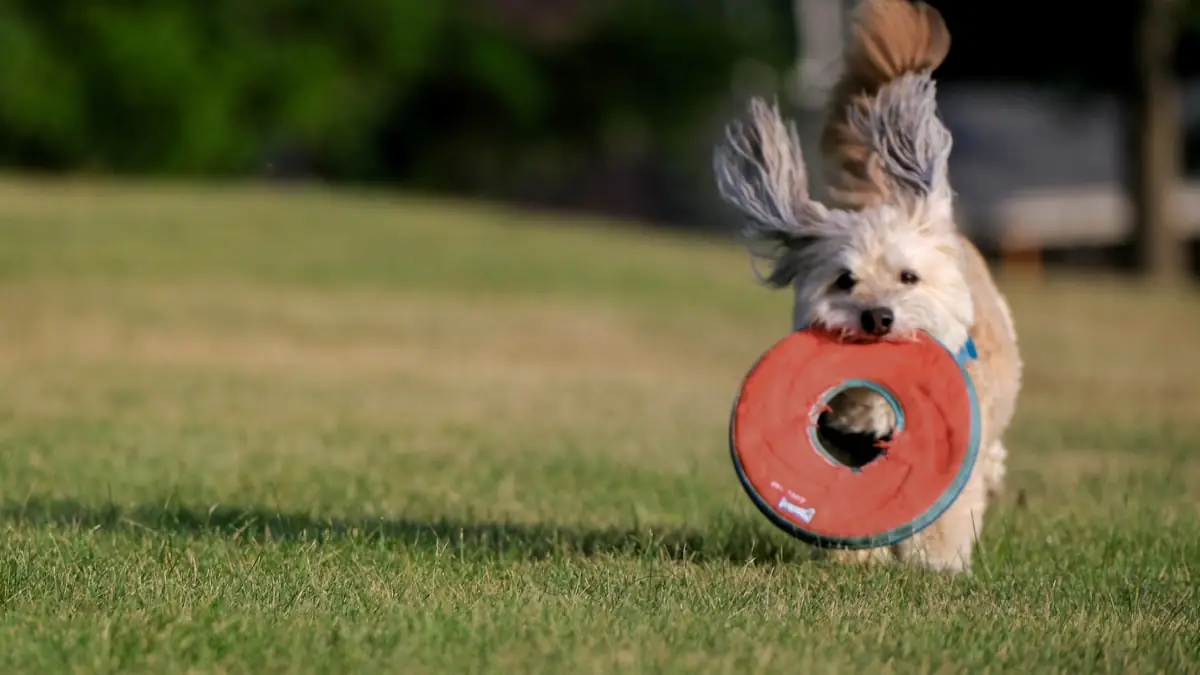
Your Border Collie is bouncing off the walls while your neighbor's Pug naps after a lap around the block, and you're left wondering: how much exercise does a dog actually need? The honest answer is that "a good long walk" is the wrong unit of measurement entirely.
Energy level, breed group, and life stage move the number more than distance ever will, and a few minutes of hard sniffing can drain a dog faster than a mile of pavement. Here's how to set the dial for the dog you actually have.
The short answer, and why "30 minutes to 2 hours" hides the real story
Most veterinarians put the daily floor at about 30 minutes of exercise, with less active breeds landing around 30 to 60 minutes and high-energy breeds typically needing 60 to 90 minutes, according to Small Door Veterinary. That range is real, but a single number is close to useless on its own. As the same vets put it, "what tires out a little Pomeranian will barely warm up an eager Border Collie."
So instead of chasing one figure, set three dials:
- Energy level and breed group — a herding dog and a flat-faced companion live on opposite ends of the scale.
- Life stage — puppies, adults, and seniors each need a different approach.
- Physical limits — body shape and health can hard-cap how much a dog should do, regardless of enthusiasm.
There's a fourth thing the standard advice tends to bury: distance is only half the equation. Mental work counts too, and it counts a lot. Dogs who are under-exercised and under-stimulated are far more likely to channel that pent-up energy into destructive and problem behaviors, so the goal is a tired-and-satisfied dog, not just a walked one.
Match the dose to the dog: a chart by energy level and breed group
Use this as a starting point, then adjust for the individual in front of you.
| Energy level | Example breeds | Rough daily target |
|---|---|---|
| Low | Pugs, Bulldogs, French Bulldogs, Chihuahuas, Basset Hounds, Mastiffs | Shorter, gentler sessions; ~30 min, split up |
| Moderate | Golden Retrievers, many companion and middle-of-the-road sporting breeds | ~30–60 min |
| High | Border Collies, Australian Shepherds, Labradors, working-line breeds | 60–90+ min, split across the day, plus a "job" |
Low-energy and low-endurance dogs — including flat-faced breeds and stockier hounds — generally do best with shorter, gentler outings rather than one long push. Moderate dogs are happy with a solid hour or so. High-energy working, herding, and sporting breeds need real exertion split across the day, and they tend to do better when part of that time involves a task: fetch with rules, a training game, or scent work that gives their brain a problem to solve.
One caveat on the chart: temperament, health, and fitness override breed stereotypes constantly. A lazy Lab and a fiery Lab can come from the same litter. When you're unsure where your dog falls, your vet is the right tiebreaker.
Puppies: the 5-minutes-per-month rule and protecting growing joints
For puppies, the American Kennel Club cites a handy rule of thumb: walk a puppy for about five minutes per month of age, once or twice a day. By that math a roughly four-month-old gets about 20 minutes per session — a benchmark, not a prescription. Puppies self-regulate anyway, alternating wild bursts of zoomies with long, hard naps.
The reason to hold back on structured exercise is underneath the skin. Puppy growth plates are still soft, and forced jogging, repetitive jumping, and pounding on hard surfaces are exactly the kind of repetitive stress they aren't built for yet. The AKC notes those plates close at different ages depending on size — roughly 6 to 8 months for small breeds, 12 months for medium breeds, 12 to 18 months for large breeds, and 18 to 24 months for giant breeds. Bigger dogs need more patience.
What's actually great for a puppy is the opposite of a regimented march: safe, self-paced free play on soft, flat ground, where the puppy sets the intensity and stops when it's tired. A secure, fenced off-leash area is a natural fit, though there's a timing question worth getting right before you go — see when a puppy can safely go to the dog park for the vaccination and age details.
Senior dogs: keep moving, but lighten the load
Older dogs still need daily activity — aim for at least 30 minutes, often broken into shorter 15- to 20-minute low-impact sessions rather than one big outing. Consistency is the point. Gentle, regular movement helps a senior hold onto muscle mass and joint flexibility and keeps weight in check, which in turn reduces the load on arthritic joints.
Watch for the signals that you need to dial back: limping, stiffness, hesitation at stairs, or general reluctance to get going. Those are cues to adjust, and to get a vet check before you ramp activity up rather than down. Favor low-impact options — leisurely walks, swimming, easy sniff-led strolls — over high-impact fetch and jumping that jar aging joints. And as physical capacity drops, mental enrichment becomes even more valuable, which brings us to the part most owners skip.
The flat-faced exception: why brachycephalic breeds need extra caution
Pugs, Bulldogs, French Bulldogs, Boston Terriers, and similar brachycephalic breeds carry a built-in limit. Their compressed airway anatomy reduces both exercise tolerance and heat tolerance, and the data on the heat side is sobering.
In a large RVC VetCompass study of UK dogs, brachycephalic dogs had about 2.1 times the odds of heat-related illness compared with longer-nosed (mesocephalic) dogs. Measured against a Labrador Retriever baseline, the odds ran roughly 14 times higher for Bulldogs, about 6.5 times for French Bulldogs, and about 3 times for Pugs. And heatstroke is not a minor event: in that study the event fatality rate was about 14% — close to one in seven affected dogs died.
So for these breeds, the practical rules matter more than the daily minute count: keep sessions short, avoid midday heat and humidity, watch closely for excessive panting, noisy breathing, or unusual fatigue, and never push a struggling dog through distress. This is the clearest case where "more exercise" is simply the wrong goal.
The shortcut owners miss: sniffing tires a dog faster than distance
Here's the underused lever. A dog's nose is not a casual accessory — VCA Animal Hospitals notes dogs have more than 100 million scent receptor sites in the nasal cavity versus about 6 million in people, and the part of the brain devoted to analyzing odors is roughly 40 times larger than ours. Sniffing is genuine cognitive labor.
That's why it tires them out. As the AKC explains, "when dogs use their sense of smell, it is tiring for them" because "they are using a large portion of their brain to do the work," and after scenting activity most dogs relax and take long naps. In practice, a focused scent session can leave a dog as satisfied as a much longer walk — in a fraction of the time and distance.
A quick enrichment menu:
- Sniffari walks — let your dog lead and sniff at its own pace.
- Snuffle mats and scatter-feeding — make finding dinner a job.
- Food puzzles and simple nose-work games — hide treats and let them search.
This is a lifesaver on rainy days, in bad-weather stretches, for low-mobility seniors, and for brachycephalic dogs who can't safely go far. Mental fatigue produces a calm, settled dog in a way that physical exhaustion alone often doesn't.
Off-leash time as efficient combined exercise
A good off-leash run is one of the highest-return outings you can give a dog because it stacks four things at once: cardio, free self-paced movement, sniffing and exploration, and social interaction. The self-regulation piece is especially valuable for puppies and seniors, who get to match intensity to their own fitness instead of keeping pace with a leash.
Play with other dogs is exercise and enrichment in the same package — one reason dog parks can be good for dogs when they're a fit for your individual dog. There's even a case that the social side is its own need; here's why dogs benefit from playing with other dogs.
To get the most out of it, the Off Leash app shows which off-leash parks are nearby and which dogs are checked in right now — so you can pick a busier time for a social pup, or a quieter window for a dog who'd rather have room. Find an off-leash area and check who's there before you head out.
Sources
- Exercise Needs for Puppies, Adults and Senior Dogs — Small Door Veterinary
- How Much Exercise Does a Puppy Need? Mental and Physical Exercises — American Kennel Club
- Incidence and risk factors for heat-related illness (heatstroke) in UK dogs under primary veterinary care in 2016 — Scientific Reports (RVC VetCompass / Nottingham Trent University)
- How Dogs Use Smell to Perceive the World — VCA Animal Hospitals
- The Many (Some Surprising) Uses and Benefits of Scent Work — American Kennel Club